
Our Flagship Initiative
The First 30 Seconds Project
The purpose
What we do, and why we do it.
The First 30 Seconds Project seeks to "pre-escalate" potential conflict during otherwise peaceful interactions between police officers and civilians. Through a collaboration with law enforcement personnel and professional athletes and coaches, training is provided with a unique approach to share insights on verbal and non-verbal communications in order to understand and prevent the potential pitfalls during police-civilian interactions before they escalate to violence. With this knowledge, we hope to save lives and livelihoods of both the members of the public, as well as police officers themselves.
This project has been dedicated to retired Captain Michael Flynn and his wife, Major Yvette Flynn, who were both law enforcement officers with the Tampa Police Department. Sadly, Michael Flynn, who was the inspiration behind the "First 30 Seconds Project" died unexpectedly in March 2021 as the result of a heart attack. His wife, Yvette, has graciously accepted to honor the legacy of her husband.
The amount of time that elapses during the first moments of a typical "routine" traffic stop encounter with a police officer. Often, these first 30 seconds will dictate the direction of the encounter.
The number of police officers who were injured in the line of duty during the nation-wide protests/riots associated with BLM/Antifa during the so-called "Summer of Love" in 2020. This included Las Vegas police officer Shay Mikalonis, who was shot in the neck by a protestor and was paralyzed below the neck for the rest of his life.
The number of Americans who died as a result of the Summer of Love riots in 2020, including David Dorn, a 77-year-old retired St. Louis police captain, and Patrick Underwood, 53, a federal officer.
The Framework
What We Teach
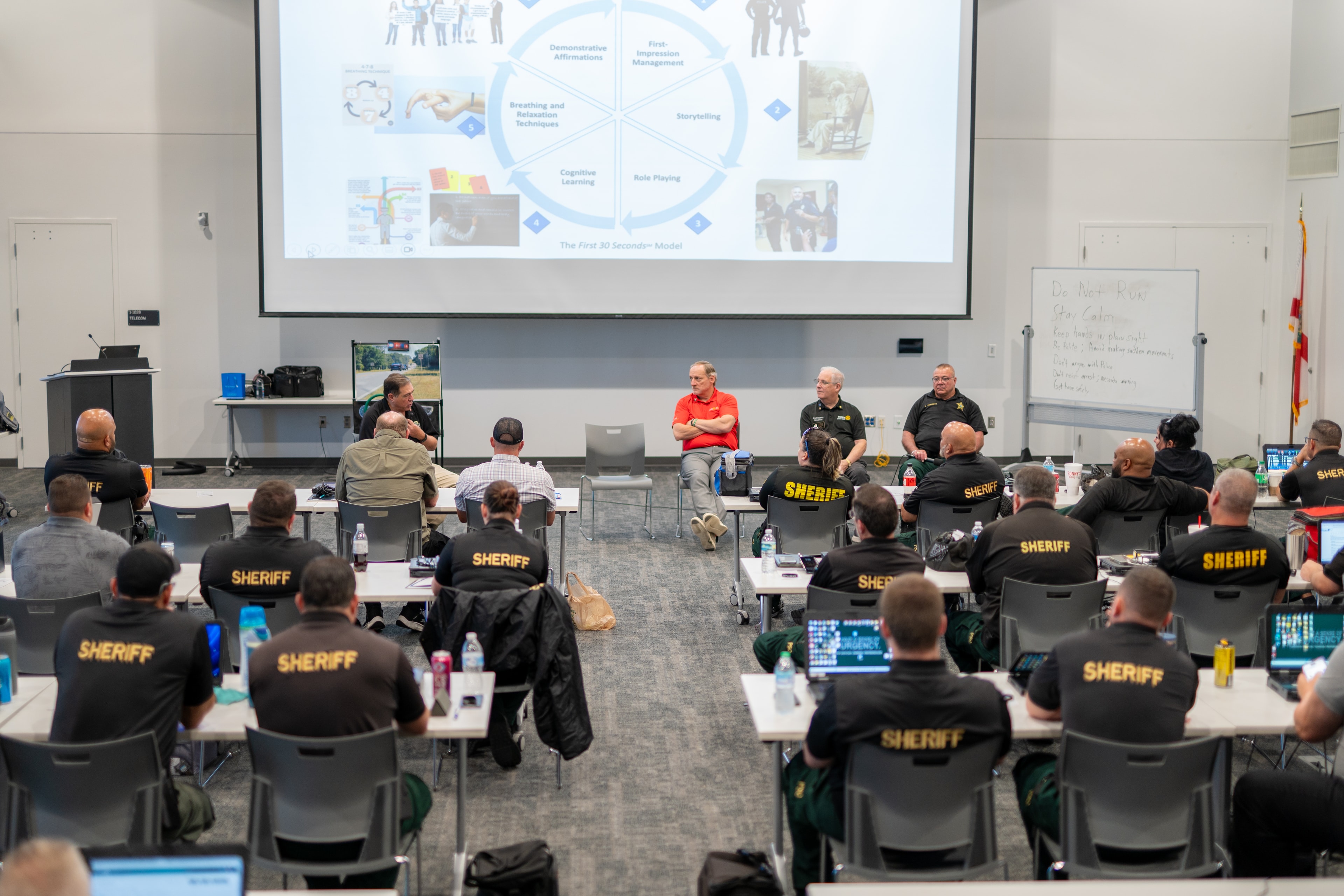
First Impression Management
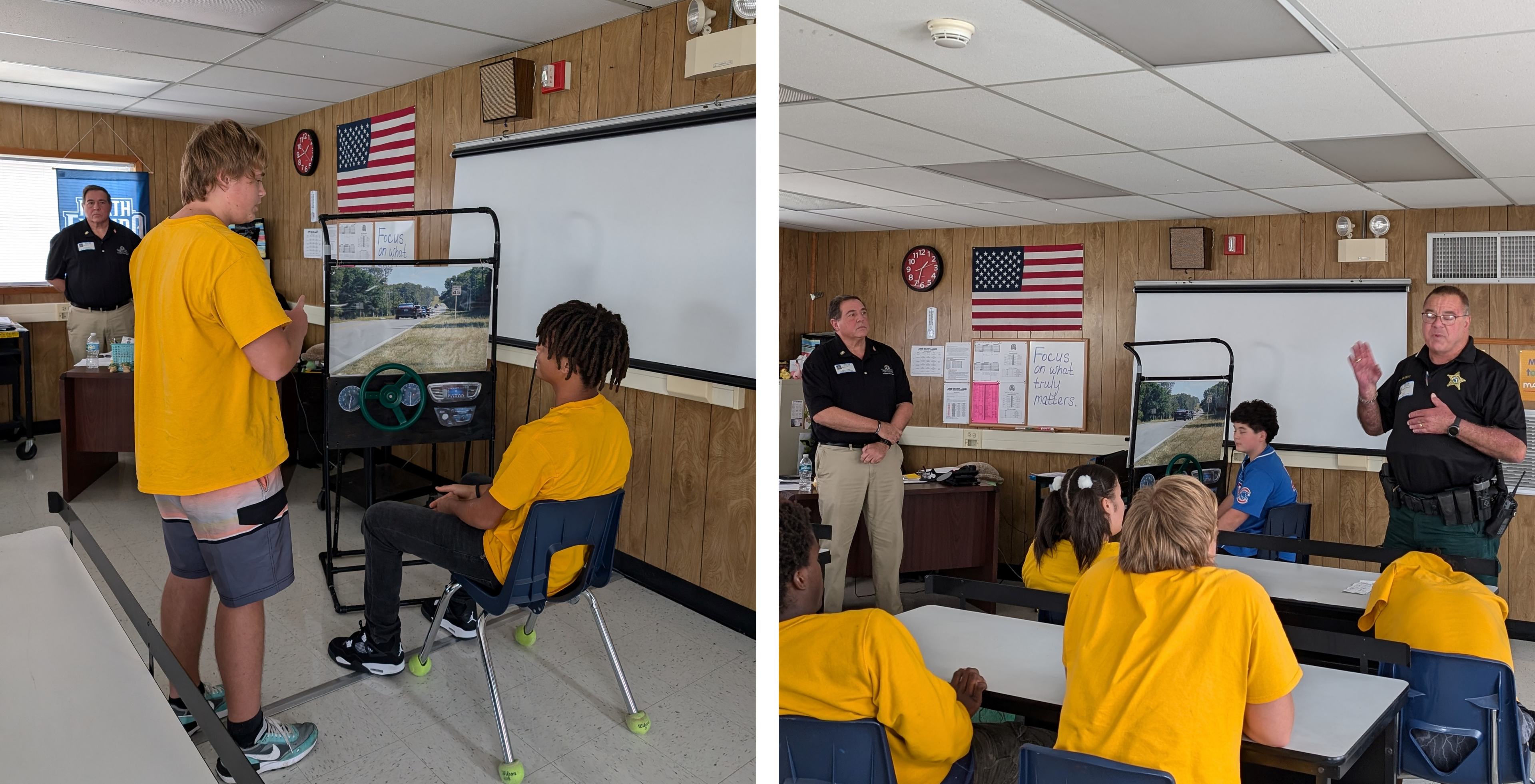
Our teams are comprised of one law enforcement officer paired with a professional or college-level athlete or coach. The purpose of this pairing is to signal to the students in the classroom that we are unified in our purpose to save the lives and livelihoods of young persons who are just learning to drive. It's not just the police officer telling them what to do and not do. The athlete/coach provides a balance and a second perspective that the students are more likely to trust and listen to.
Storytelling
We ask that our mentors incorporate their own personal stories that pertain to traffic stops or police-civilian encounters at the very beginning of the sessions. Students will likely relate more to real life stories than to hypothetical and abstract concepts. Our law enforcement officers and athletes/coaches have interesting stories that we encourage them to use. But first, we assess the relevance and appropriateness of the stories before they are told to the audience.
Cognitive Learning
Immediately following the storytelling, we go over the "10 tips to follow when stopped by the police" and ask the students to read out loud from printed cards that they are provided. Each of the 10 tips are discussed as to why they are important to "pre-escalate" the chances of conflict during the traffic stop. Emphasis is given to the recognition that non-verbal communication accounts for the majority of human interaction. We emphasize the importance of being cognizant of one's own body language, tone, and the environment to navigate any encounter safely.
Breathing and Relaxation Techniques
Police-civilian encounters can be stressful to both parties. We take a few minutes to discuss certain relaxation techniques that the students can learn and use during stressful situations. When time permits, we do an in-class exercise called the 4-7-8 diaphragmic breathing technique. This technique can be used to improve performance in many other contexts in life, such as athletic performance, test-taking, public speaking, and many more common situations.
Role Playing
This is the part of the session that we do traffic stop scenarios wherein one of the students plays the part of the police officer and the other plays the part of the driver getting stopped for a "routine" traffic violation. The mentors briefly show both of these role players what they're supposed to do, and then turn it over to them to do it. Immediately following the role-playing exercise, we discuss the scenario with the entire class and get their input of what went right and what went wrong. This is probably the part of the class that students get the most value out of.
Demonstrative Affirmations
Time-allowing, during follow-up visits, we ask the students to "teach" us what we taught them during the first session. We find that this follow-up session is important for a longer-lasting retention of the most important lessons. We encourage the students to be creative in their "demonstrative affirmations" and to have fun doing it. These affirmations can be in the form of reading out loud a brief essay, or making a short video, or artwork and posters, or simply playacting an example of a traffic stop pre-escalation situation. The cooperation of the classroom teacher in-charge is most important for this last step to happen.
Who It's For
Built for Every Side of the Encounter
Law Enforcement
Police officers who may have conducted thousands of traffic stops during their careers can also benefit from our project. They too can learn to approach encounters with awareness and communication tools that reduce escalation from the very first moment.
Community Members
Not just new drivers can benefit from our classes. Traffic stops can be stressful, even for older and more experienced drivers. All members of the community can gain practical knowledge about how to interact with law enforcement in ways that promote safety and mutual respect.
Youth & Schools
Young people who are just beginning to drive can learn conflict resolution skills that will help them deal with stressful traffic stop situations, but will also serve them in every other area of life — from the classroom to the street.
Organizations
Businesses, nonprofits, and civic groups bring these skills into their teams and communities through our workshop programs. For example, the Boys & Girls Clubs have called upon us to provide our mentoring for their kids. We have also done sessions for a college football team and a high school football team. We are receptive to inquiries from all organizations.
The Impact
What students said in their post-session survey responses.
Participants consistently reported a greater appreciation of what police officers are faced with when they conduct "routine" traffic stops. Many expressed their own increased confidence, reduced fear, and improved outcomes in real-world encounters after completing our training. Below are some of the feedback responses that we received from our post-class surveys that asked: "What was the most effective aspect of the class?" "What was the single most important lesson that I learned from this Class?"
"Sharing their experience in being a police officer and what to do in these situations by giving us tips and advice."
Wiregrass High School Driver's Ed Student
"The most effective aspect of the class was the breathing technique."
Wiregrass High School Driver's Ed Student
"The most effective was the role-play scenario where someone gets pulled over."
Wiregrass High School Driver's Ed Student
"How crucial it is to stay alert and make safe decisions while driving to prevent bad outcomes."
Wiregrass High School Driver's Ed Student
Ready to Learn the First 30 Seconds?
Contact us to request a meeting or presentation at your school, non-profit organization, or community service club.